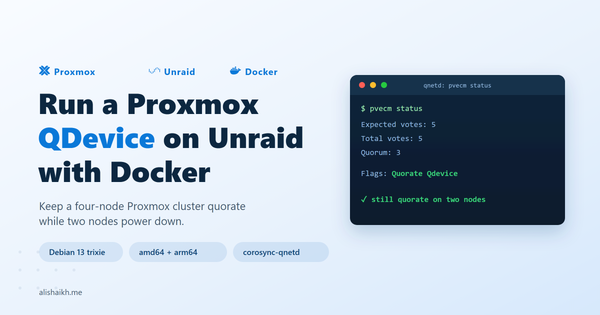
Run a Proxmox QDevice on Unraid with Docker
Shut down half a four-node Proxmox cluster without losing quorum, using a corosync QDevice built with Docker and hosted on Unraid.
Shut down half a four-node Proxmox cluster without losing quorum, using a corosync QDevice built with Docker and hosted on Unraid.
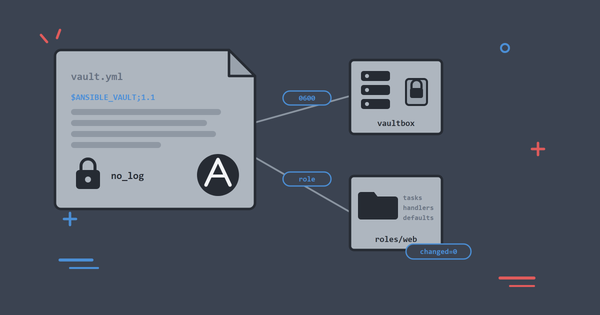
Encrypt secrets with Ansible Vault and keep them out of logs, refactor playbooks into a role, lean on lint and CI, and name what actually changes when this becomes real infrastructure.
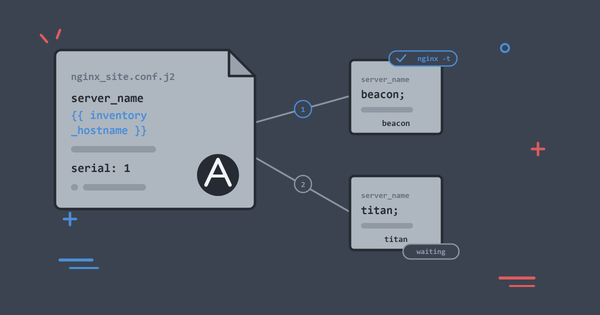
Render per-host configuration from Jinja2 templates, validate it before the service reloads into it, and roll the change across a fleet one host at a time with serial.
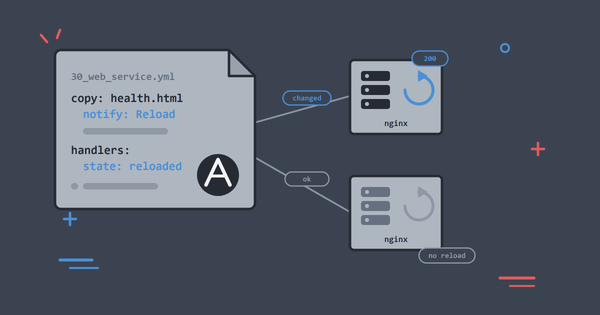
Install nginx, deploy a page and meet handlers: the Ansible mechanism that reloads a service only when something actually changed, with a health check that fails the run when the service does not answer, verified against real systemd.
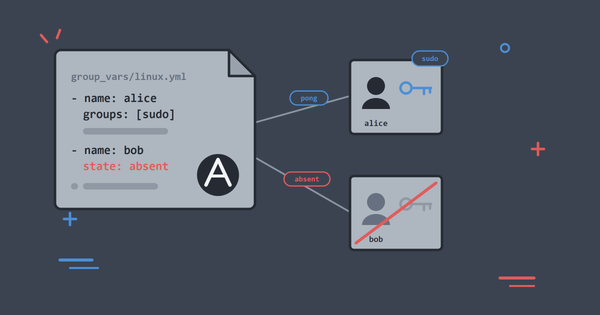
Onboard and offboard users across a group of Linux servers with one playbook: accounts, SSH keys and sudo rules defined as data, applied with loops and validated before they land.
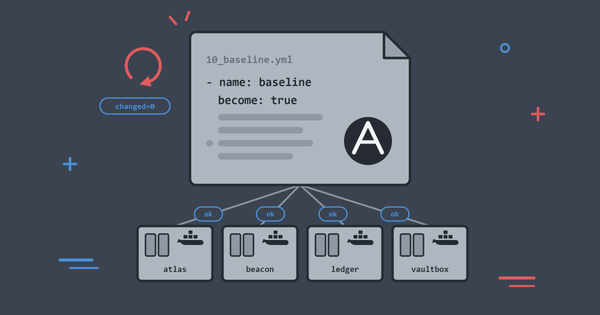
Turn ad-hoc commands into a repeatable playbook that brings Linux servers to a known baseline, with check mode, diff mode and idempotence explained properly.
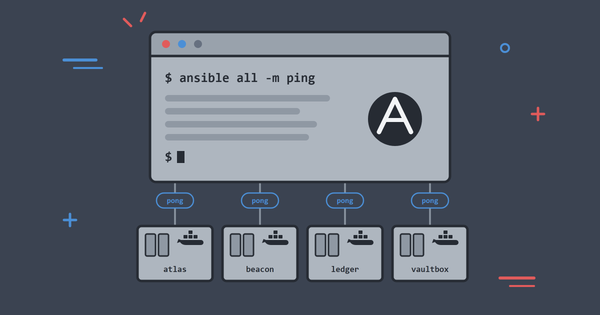
Learn how Ansible decides which hosts to manage, how to run ad-hoc commands against groups, and how to use facts to answer real operational questions.
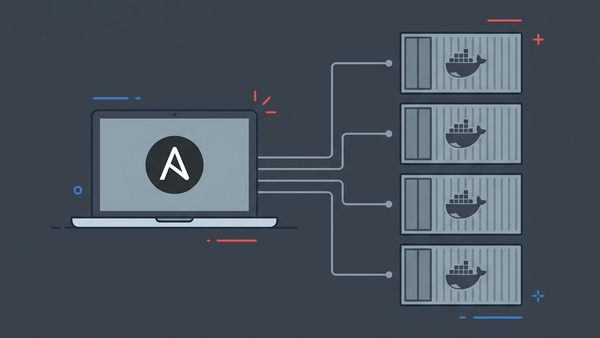
Learn how to build a local, multi-host Ansible practice lab using Docker in under 10 minutes. Perfect for Windows, macOS, or Linux. No heavy VMs required.
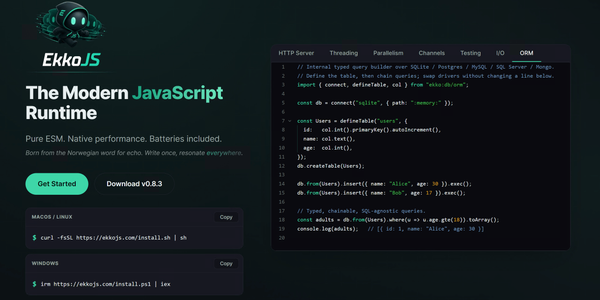
EkkoJS is a JavaScript and TypeScript runtime that trades backward compatibility for a cleaner slate. No CommonJS, no node_modules, no URL imports. This is a hands-on introduction covering the architecture, the permission model, and a working S3 demo built entirely from built-in modules.
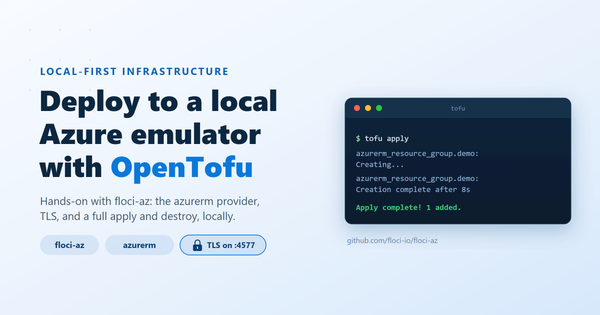
A practical walkthrough of running the OpenTofu azurerm provider against floci-az, including TLS, certificate trust, provider discovery, version notes, and what local Azure testing can and cannot prove.
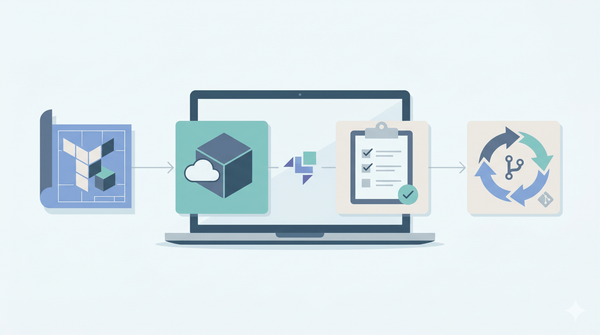
Provision the LocalStack stack from Parts 1-7 with Terraform, apply it with tflocal, and run integration tests in GitHub Actions CI. The capstone turns the series into a repeatable, tested workflow.
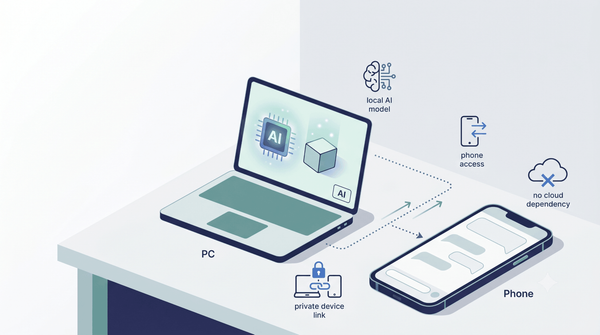
Run an AI model on your home PC or homelab with LM Studio, connect it with LM Link, and use it from an iPhone, iPad, laptop, or work PC without opening ports.
AWS
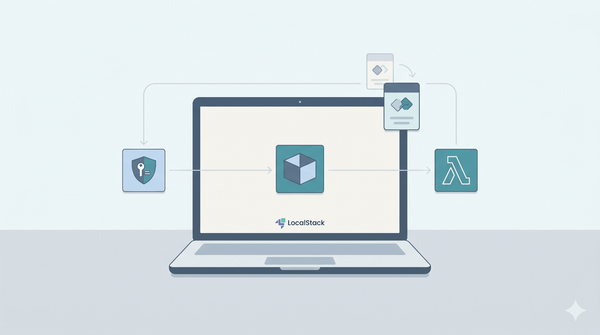
Store API keys properly on LocalStack with Secrets Manager and a customer-managed KMS key. Build a Lambda that reads the secret at request time, rotate it, and watch the new value go live without a redeploy.
AWS
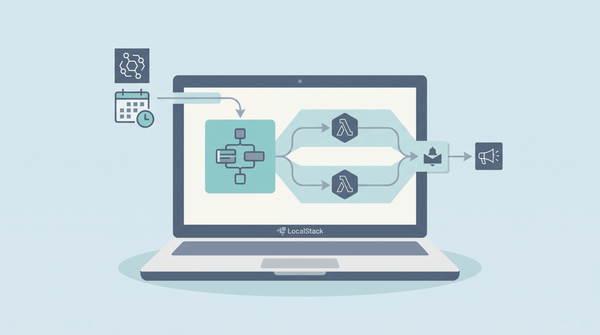
Build a real Step Functions workflow on LocalStack: validate, fan out across parallel Lambdas, then notify via SNS. Trigger it manually, then wire it to an EventBridge schedule and watch it fire automatically.
SNS
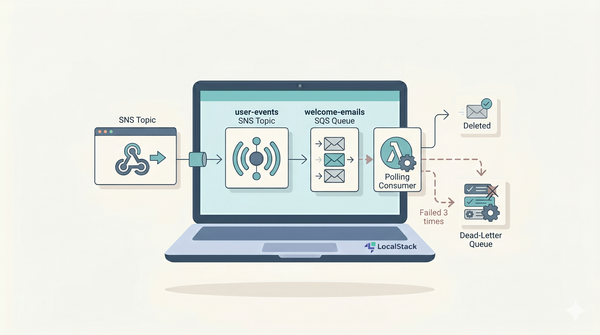
Build a real async job pipeline on LocalStack with an SNS topic, an SQS queue, and a DLQ. Watch a poison message retry three times, land in the DLQ, and inspect what to do next.
DevOps
After using LocalStack for years and publishing the first four parts of my local AWS series, Floci caught my eye: MIT licensed, no account required, and built around the same localhost:4566 workflow.
AWS
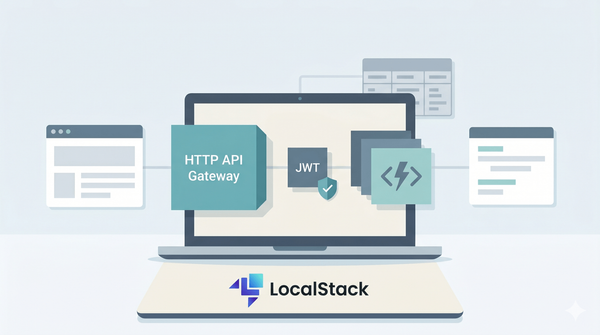
Put a real HTTP API in front of the URL shortener from Part 2. API Gateway HTTP API, Lambda, a small JWT authoriser, and curl-based verification running on LocalStack.
AWS
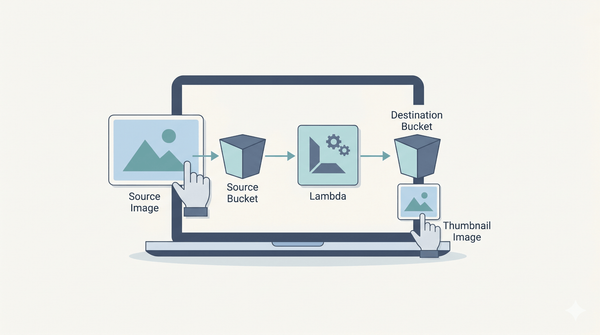
Wire Lambda to S3 upload events on LocalStack. Upload a photo, get a 256px thumbnail in another bucket automatically, and learn the `localhost.localstack.cloud` networking gotcha before it wastes an evening.

AWS
Build the DynamoDB layer for a URL shortener on LocalStack: table design, atomic click counters, fixture loading, and a small Node CLI you can reuse. Part 3 detours into Lambda, then Part 4 wraps the shortener in an HTTP API.
AWS
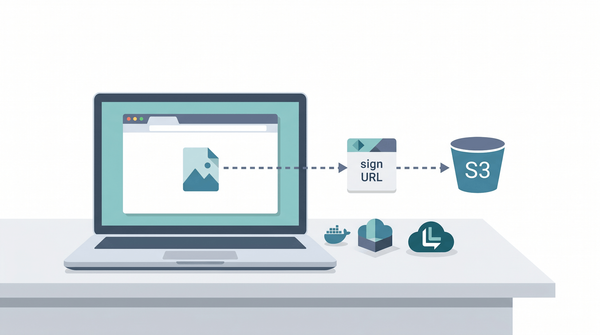
Build the first real app in the LocalStack series: an S3 bucket, CORS, presigned PUT URLs, and a tiny browser photo uploader.
AI
Docker has shipped a Toolkit and Catalog for the Model Context Protocol, plus a Gateway that fronts the lot. Containerised MCP servers, signed images, OAuth handled in-browser, and Profile Templates added in March 2026. Here's what it actually does and where it fits.
AWS
Photo uploads, a URL shortener, async jobs, scheduled workflows — all running on LocalStack on your laptop, all free. Part 0 of a 9-part series walks through the setup: Docker, auth token, AWS CLI, init-hooks. About 30 minutes from a fresh laptop to a working S3 bucket.

Fedora
Fedora 44 released 28 April 2026. GNOME 50, kernel 6.19, NTSYNC for Wine, GCC 16, Ruby 4.0, CMake 4 with ninja. What changed and how to upgrade safely.
Originally called Clawdbot, now rebranded as OpenClaw, it's an open-source AI that actually does things instead of just chatting. So this weekend, I set it up on my Proxmox homelab.